Online Tailoring from Lahore for Overseas Pakistanis: The Complete Guide to Remote Bespoke Fitting
For Pakistanis living in London, Bradford, Toronto, Houston, Dubai, and Sydney, getting traditional festive and bridal clothing stitched in Pakistan has long been a source of profound frustration. Every wedding season brings familiar stories: garments shipped overseas with armholes that bind, lehenga lengths cut four inches too short, unverified fabrics substituted without notice, and local UK or US tailors charging upwards of £150 or $200 simply to attempt basic alterations on delicate embroidery.
Historically, families spent thousands on emergency flights back to Lahore just to attend fitting sessions in Anarkali or Liberty Market. Today, structured remote measurement protocols, direct video consultations with master tailors, and thoughtful internal construction allow overseas clients to commission custom garments from Lahore with complete confidence.
In this guide, you will learn:
- How remote digital measurements achieve an accurate fit without in-person sessions
- The essential construction safeguards every overseas garment must have
- How Lahore remote tailoring compares to local Western boutiques and flying in person
- The step-by-step process of commissioning clothing from abroad
- Practical checklists to prepare before booking your tailoring
Quick Answer: Online tailoring from Lahore works reliably when built on three non-negotiable principles: 1-on-1 video measurement verification directly with a cutting master, generous 2.5-inch finished internal seam margins for future adjustments, and staged production approvals with clear photo or video checkpoints before garments are sealed and dispatched.
The Core Challenge: Why Long-Distance Tailoring Usually Fails
Most overseas tailoring disappointments stem from three systemic market practices rather than poor craftsmanship:
- Static Size Charts: Standard small, medium, and large sizing charts cannot accommodate the varied proportions of South Asian silhouettes. A fitted peshwas bodice or lehenga choli rests on precise skeletal landmarks; a half-inch discrepancy in shoulder slope or back length creates gaping necklines or restrictive armholes.
- Minimal Seam Allowances: Commercial tailors often cut seam margins to a fraction of an inch to economize on fabric yardage. If the garment arrives slightly snug after overseas transit, local tailors cannot let it out without cutting into delicate embroidery stitches.
- Lack of Mid-Production Visibility: Traditional orders disappear into bazaar workshops for months, leaving clients blind until a finished parcel arrives on their doorstep days before an event.
Addressing these three vulnerabilities transforms remote tailoring from an unpredictable risk into a repeatable, reliable process.
The Remote Tailoring Framework: How to Achieve a True Bespoke Fit
A proper remote tailoring process relies on clear communication, structured measurement recording, and deliberate pattern drafting.
1. Guided Video Anatomical Mapping
Rather than having clients measure themselves alone with a downloaded chart, a master cutting tailor guides the session over WhatsApp video. The tailor observes client posture, shoulder slope, and natural waist placement in real time, instructing the helper exactly where to place the tape.
Key Biometric Checkpoints During Video Profiling:
├── Bodice Architecture: High bust, apex bust, underbust ribcage, and cross-front width
├── Posture & Balance: Individual shoulder drop, nape-to-waist back length, and neck stance
├── Sleeve Articulation: Bicep flexion circumference, elbow clearance, and wrist taper
└── Lower Garment Fall: True natural waist anchor, pelvic crest, and heel-adjusted floor length
Artisan Note from Abdul Ghaffar:
Posture is the most overlooked variable in remote tailoring. Two people can share an identical 36-inch bust and 28-inch waist, yet require completely different pattern drafts because one stands with shoulders slightly rounded forward while the other has an erect, arched stance. Observing posture on video allows the cutting master to balance the front and back panel lengths so the hem hangs level rather than riding up in the front.
2. Built-In Structural Margins: The 2.5-Inch Rule
Every garment drafted for overseas delivery should incorporate 2.5 inches of finished internal seam allowance along the bodice side seams, sleeve underarms, and waistbands.
These margins must be overlocked and bound with silk piping so that if your weight fluctuates before the wedding, or if you prefer a looser fit once you try it on at home, any local tailor in your city can easily adjust the garment by up to two full dress sizes without touching delicate embroidery.
3. Fabric Selection and Breathable Interfacings
Synthetic, stiff heat-pressed interfacings often bubble or stiffen after overseas air transit and climate shifts. Quality Lahore tailoring utilizes floating canvas and natural cotton batiste interfacings that adapt organically to your body heat and drape comfortably throughout extended wedding receptions.
Comparing Your Options: Remote Lahore Tailoring vs. Alternatives
Overseas families typically weigh three main routes when commissioning traditional attire. Here is an honest appraisal of each:
| Factor |
Remote Lahore Atelier (SARTOR) |
Flying to Lahore in Person |
Local Western Boutiques (UK/US) |
| Travel & Lodging Costs |
£0 / $0 |
£1,000–£3,000+ per person |
£0 / $0 |
| Garment Customization |
Complete bespoke design, fabric choice, and embroidery |
Complete access to local bazaars and ateliers |
Limited to off-the-rack stock or catalog orders |
| Fitting Precision |
High (via guided video profiling + built-in margins) |
Highest (multiple in-person muslin trials) |
Moderate (standard rack sizes adjusted locally) |
| Price per Finished Suit |
Authentic Lahore studio pricing |
Authentic bazaar pricing |
2.5x to 4x markup for imported retail inventory |
| Time Investment |
1–2 hours for consultations & approvals |
10–14 days in country attending bazaar appointments |
Immediate off-rack purchase + 1–2 weeks alteration |
| Alteration Risk |
Low (protected by 2.5" seam margins) |
Minimal while in country; high once home |
Handled by local boutique staff |
When to Choose Remote Lahore Tailoring
Choose Remote Tailoring from Lahore when...
- You need customized formalwear, bridal party outfits, or bespoke menswear tailored to your exact measurements.
- You want authentic Lahore hand embroidery (such as zardozi, dabka, or marori) crafted directly by local master artisans without boutique markups.
- You do not have the time, budget, or family leave required for an international trip to Pakistan.
- You have specific design inspirations or vintage family fabrics you want converted into modern silhouettes.
Consider Alternative Options when...
- You need a simple ready-to-wear outfit within 48 to 72 hours for an immediate weekend event (visit a local boutique in your area).
- You require a multi-piece couture bridal trousseau involving eight or more complex fitting trials, and your schedule already allows for an extended visit to Lahore.
Step-by-Step: The Remote Tailoring Journey
The SARTOR Remote Tailoring Journey:
Step 1: Design Consultation ──> Step 2: Guided Measurement ──> Step 3: Adda & Cutting ──> Step 4: Video Inspection ──> Step 5: Tracked Dispatch
Step 1: Initial Consultation and Silhouette Review
Share your design ideas, event dates, preferred color swatches, and fabric preferences via WhatsApp. Our master tailor evaluates whether your desired embroidery and silhouette suit the drape of your chosen textile.
Step 2: Guided Video Measurement Session
Schedule a 20-minute WhatsApp video session. Ensure you have a flexible tailor's tape and a family member or friend present to hold the tape while the master tailor directs placement.
Step 3: Staged Production Updates
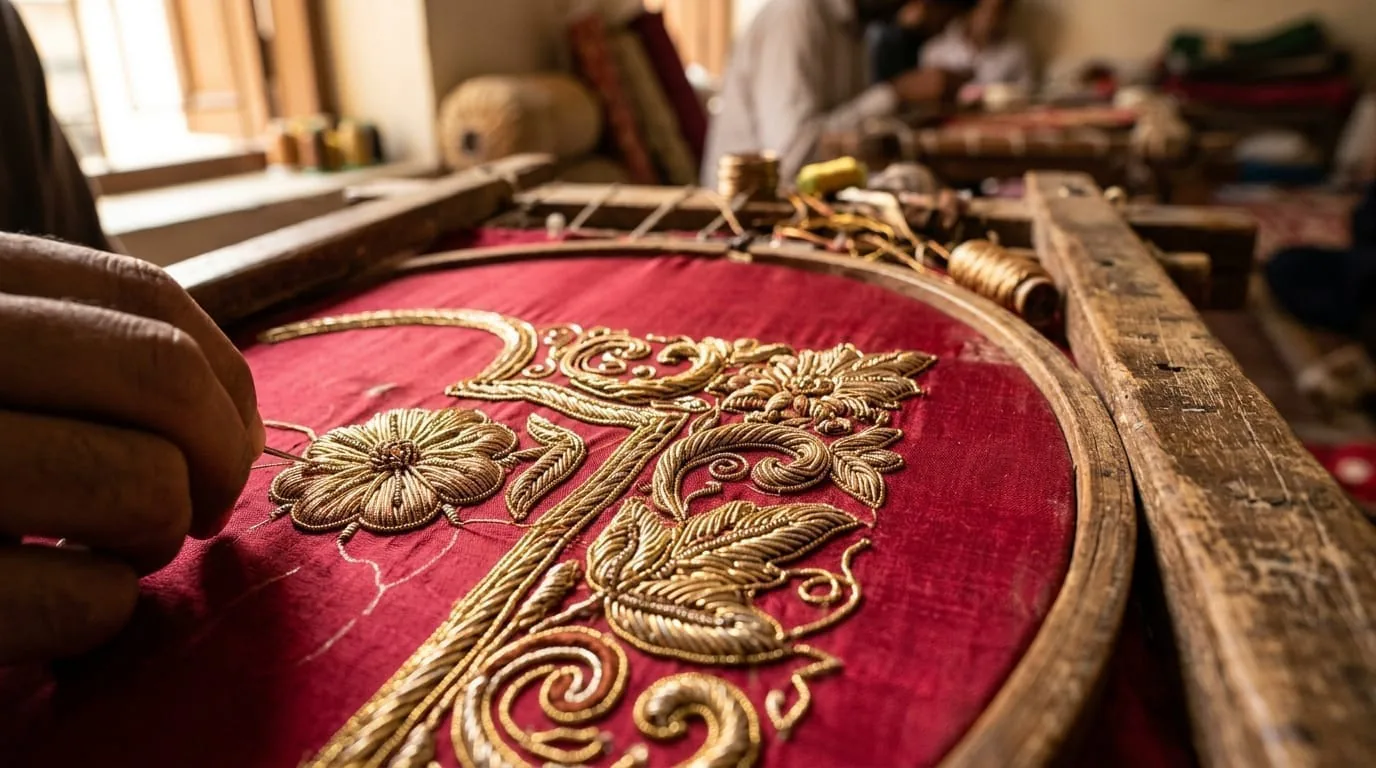
For hand-worked formalwear, you receive high-definition photos or video previews of the embroidery frame (adda) before assembly, confirming color balance, thread density, and motif placement.
Step 4: Final Construction Inspection
Once tailored, the garment is basted and reviewed on an atelier dress form matching your proportions. Measurements are verified against your original profile before final packing.
Step 5: Tracked Global Courier Dispatch
Garments are carefully folded with acid-free tissue paper, packed in protective garment covers, and dispatched with international express tracking directly to your door.
Customer Preparation Checklist: Before Your Video Session
To ensure your measurements are captured accurately the first time, prepare the following:
- [ ] Flexible Tailor's Tape: Use a standard vinyl or fiberglass measuring tape (not a rigid metal builder's tape).
- [ ] Light Fitting Clothes: Wear a lightweight fitted t-shirt, leggings, or a well-fitting basic kurti. Avoid bulky knitwear or padded hoodies.
- [ ] The Right Undergarments: Wear the exact style of undergarments (such as a supportive bra or shapewear) that you plan to wear under your formal outfit.
- [ ] Event Footwear or Heel Height: Know the approximate heel height you plan to wear so lower garment hemlines can be calculated precisely.
- [ ] A Helper: Have a friend or relative available to hold and read the tape according to the master tailor's instructions.
- [ ] Natural Standing Posture: Stand relaxed with feet flat on the floor, looking forward. Never hold your breath or pull your stomach in.
SARTOR's Bespoke Services for Overseas Pakistanis
SARTOR provides end-to-end bespoke tailoring and clothing services managed directly from our Lahore atelier:
- Custom Bridal & Formal Couture: Complete bridal lehengas, peshwas, shararas, and ghararas coordinated with generational hand embroidery artisans. Explore our dedicated custom bridal tailoring services.
- Festive & Everyday Bespoke Suits: Two-piece and three-piece women's suits, raw silk formals, and chiffon ensembles crafted to individual proportions.
- Men's Formalwear: Tailored sherwanis, prince coats, bespoke waistcoats, and classic raw silk kurta-pajama sets.
- Master Cutting & Fitting Oversight: Every pattern is personally drafted or reviewed by Master Tailor Abdul Ghaffar.
For technical guidance on measuring each anatomical point, consult our detailed digital measurements guide for custom tailoring. If you are comparing embroidery styles, read our guide on Zardozi vs. Dabka vs. Marori.
Frequently Asked Questions
How long does online tailoring from Lahore take to deliver overseas?
Standard delivery timelines depend on garment complexity:
- Simple bespoke suits and everyday formals typically require 10 to 15 days for production, plus 4 to 6 business days for international transit.
- Heavily embroidered formalwear or bridal ensembles requiring adda handwork require customized milestone schedules (typically 4 to 8 weeks).
SARTOR confirms exact delivery targets before your order is accepted.
What happens if my garment needs a slight adjustment when it arrives?
Because every SARTOR garment includes generous 2.5-inch finished internal seam margins and easily adjustable hook placements, any minor adjustments can be completed locally by a neighborhood tailor in minutes, without altering the embroidery or damaging the fabric.
Can I send my own fabric to SARTOR in Lahore?
Yes. If you or family members in Pakistan already have unstitched designer fabric or vintage heirloom textiles, our courier can arrange doorstep pickup in Lahore, or your relatives can drop it off directly at our studio.
How do I pay for my tailoring from abroad?
SARTOR accommodates secure overseas bank transfers, digital remittances, and standard electronic payment options tailored to clients in the UK, US, Canada, Europe, and the Middle East.
Do I have to measure myself alone?
No. SARTOR conducts scheduled 1-on-1 WhatsApp video consultations where Master Tailor Abdul Ghaffar guides you and your helper step-by-step, verifying each number in real time to prevent self-measurement errors.
Ready to Commission Your Next Garment from Lahore?
You do not need to wait for your next trip to Pakistan or settle for ill-fitting off-the-rack boutique stock. SARTOR provides authentic Lahore atelier craftsmanship, personalized fitting care, and reliable international delivery.
- Step 1: Contact Our Atelier: Send a message to SARTOR on WhatsApp with your event date and silhouette ideas.
- Step 2: Free Style Consultation: Review fabric options, embroidery styles, and transparent pricing with our team.
- Step 3: Guided Video Fit: Capture your millimeter-accurate measurements with Master Tailor Abdul Ghaffar.
Message SARTOR on WhatsApp today to start your bespoke tailoring consultation.
Log Your Measurements & Book with SARTOR Model Town
Record your 28-point anatomical measurement profile directly in our pre-beta digital measurement client portal at app.sartor.pk for lifetime version-controlled accuracy across every wedding event, or explore our bespoke couture disciplines at sartor.pk.
- Master Cutting Authority: Master Tailor Abdul Ghaffar
- Atelier Headquarters: Shop F-9, Moon Tower, Block 30-M, International Market, Model Town, Lahore, Pakistan
- Direct Consultation (WhatsApp): wa.me/923320500904 (
+92 332 0500904)
- Global Logistics & Terms: 7–10+ business day bespoke crafting timelines, 4-step milestone payments (10% booking, 30% adda sample approval, 30% mid-production, 30% final dispatch), and 3–5 day insured DHL/FedEx Express shipping compliant with $800 US / £135 UK customs thresholds.
Related Masterclasses & Guides
Overseas Tailoring
A complete guide for UAE residents in Dubai, Abu Dhabi, and Sharjah ordering custom Pakistani tailoring direct from Lahore. Save 45–60% with remote biometric sizing, 2.5-inch seam margins, and 2–3 day express DHL delivery.
Read Masterclass
→
Customization Playbook
Learn how diaspora clients customize unstitched Pakistani suits with warm silk linings, modest necklines, and full-coverage sleeves for cold Western climates.
Read Masterclass
→
Bridal Masterclass
Living in London, Toronto, New York, or Dubai? Learn how overseas Pakistanis commission custom luxury formals directly from Lahore with digital sizing, 4-step escrow, and 3–5 day DHL Express.
Read Masterclass
→